
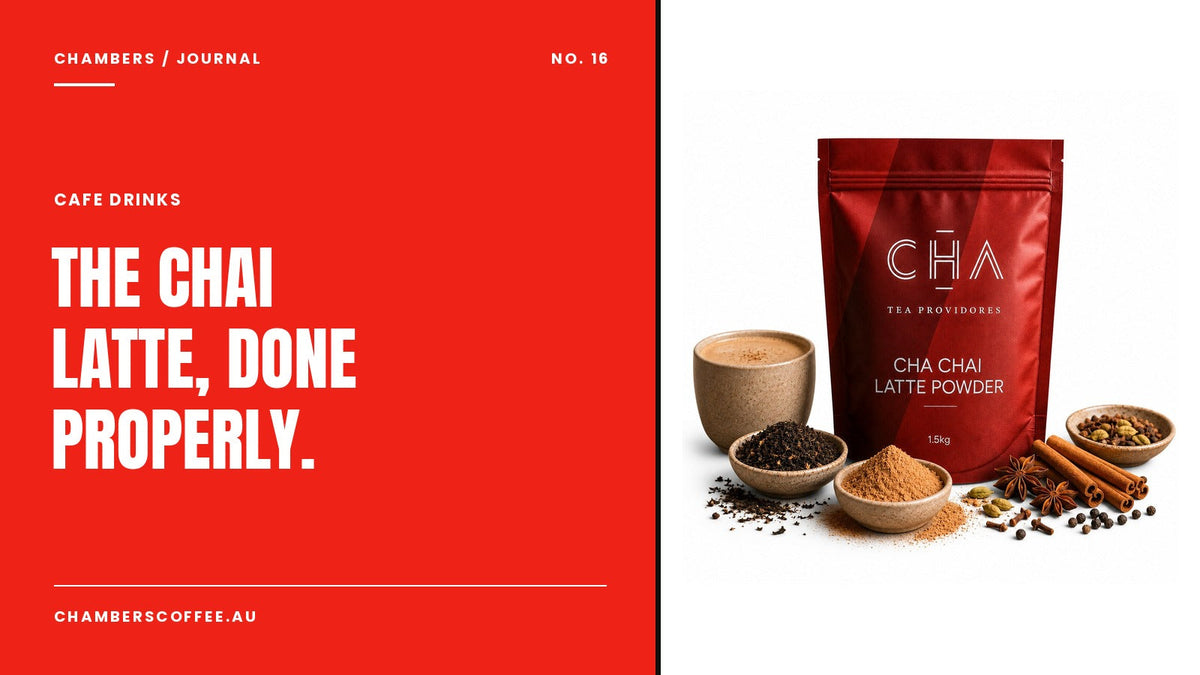
A good chai latte is warm, spiced and properly sweet without tasting like a dessert. A bad one is gritty, watery, or so sugary you cannot find the spice. The difference comes down to ratio and technique, and both are easy.
The basic hot chai latte
Two minutes, one mug.
- Add 2–3 teaspoons of chai powder to your mug. Start at 2 and adjust — people's preferences vary more with chai than with coffee.
- Add a small splash of hot water — about 30ml — and stir into a smooth paste. Do not skip this. It is the single step that separates smooth chai from gritty chai.
- Heat 200ml of milk to around 65–70°C. Steam it if you have a wand, microwave it if you do not.
- Pour the milk in slowly, stirring as you go.
- Dust with cinnamon if you like.
The CHA chai blend is what we pour across the Chambers cafés — properly spice-forward, milled fine, and not overly sweet. If you prefer something rounder and naturally sweeter, the honey chai does that without needing added sugar.
Iced chai latte
Sydney summers demand this one.
- Make a concentrate: 3 teaspoons of chai powder with 50ml of hot water, stirred smooth.
- Fill a tall glass with ice.
- Pour over 200ml of cold milk.
- Add the concentrate and stir.
Always dissolve the powder in hot water first. Chai powder simply will not dissolve into cold milk, and you will spend the whole drink chasing clumps around the bottom of the glass.
Dirty chai
A chai latte with a shot of espresso through it. Genuinely excellent, and the answer for anyone who cannot choose between chai and coffee at 3pm.
Make your chai latte as above, then pull a single shot of Starry Night and pour it in. The darker, chocolatey profile sits behind the spice rather than fighting it — a brighter blend tends to clash with cardamom and clove.
Getting the milk right
Chai is mostly milk, so the milk matters.
- Full cream — the standard. Body and sweetness carry the spice.
- Oat — the best non-dairy option by a distance. Naturally sweet and it does not split.
- Almond — works, but thinner. Use a barista blend or it can separate against the spices.
- Soy — fine, though the flavour is more assertive and competes with the chai.
Do not boil the milk. Above about 70°C the milk sugars start to scald and you lose the natural sweetness — the same rule that applies to coffee.
Common questions
Does chai latte have caffeine? Yes, but not much. Chai is black tea based, so a typical chai latte has roughly 25–50mg — about a third of a standard coffee. That makes it a reasonable afternoon drink for people who are sensitive to caffeine.
What is the difference between chai powder and chai concentrate? Powder is milled spices and tea, mixed fresh each time, and keeps for a long time in the cupboard. Liquid concentrate is pre-brewed and needs refrigeration once opened. Powder is more economical and gives you control over strength.
Why is my chai gritty? You added milk before dissolving the powder in hot water. Make the paste first, every time.
Is chai latte healthy? It depends mostly on how sweet the blend is. Ours are naturally spice-led rather than sugar-led, and both are gluten free, dairy free and vegan friendly as a powder. What you add matters more than what is in the tin.
Can I make it caffeine free? Not with a black-tea chai. Try our turmeric latte instead — warm, spiced and completely caffeine free, which makes it an easy evening drink.
Chai, matcha, turmeric and drinking chocolate — the same blends we serve in our cafés. Shop the pantry range, free shipping over $100.