
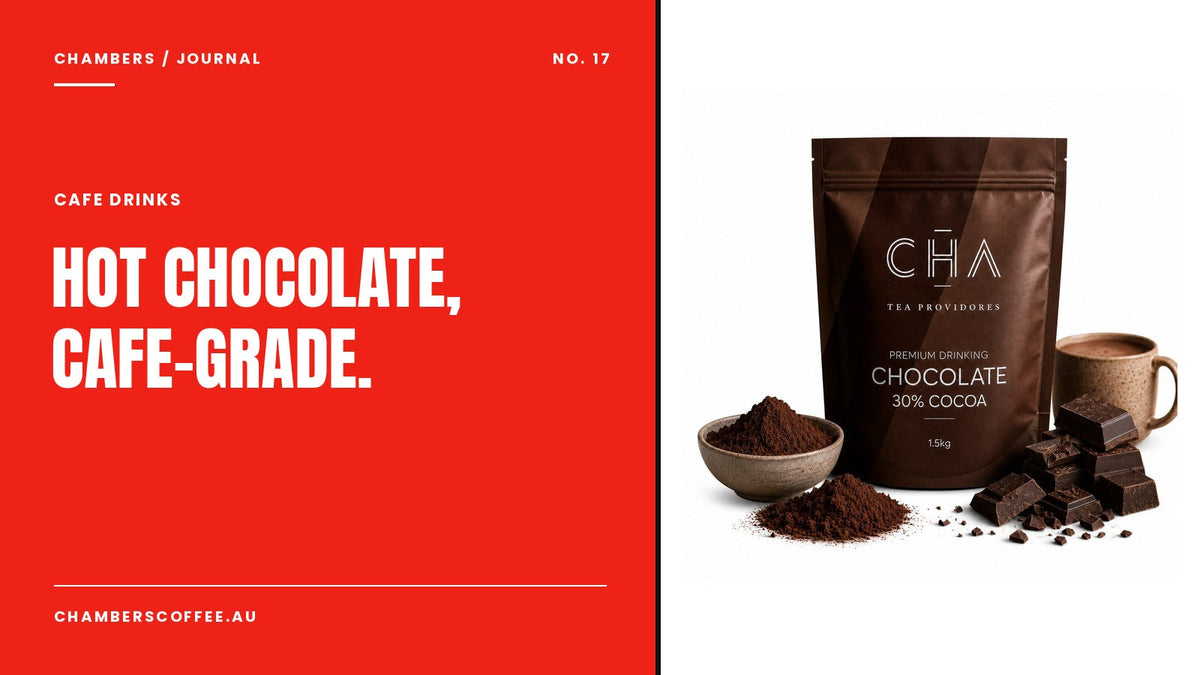
Almost everyone has made disappointing hot chocolate at home — thin, powdery, faintly chalky, sweet in a flat way. Then they order one at a café and it is thick and glossy and actually tastes of chocolate.
The gap is not skill. It is the powder, and one technique.
Cocoa percentage is the whole thing
Supermarket drinking chocolate is frequently 10–15% cocoa. The remainder is mostly sugar, milk solids and fillers. It tastes sweet because there is not enough cocoa there to taste of anything else.
Café drinking chocolate typically starts at 20% and goes up. That is the difference you are tasting.
- Classic 20% cocoa — smooth, milky, crowd-pleasing. The one to buy if kids are drinking it, and our pick for dusting cappuccinos.
- Premium 30% cocoa — noticeably richer, darker, with a caramelised stone-fruit note. This is the one for adults who think most hot chocolate is too sweet.
Both are organic cacao, gluten free, dairy free and vegan friendly as a powder.
The method
- Add 3–4 teaspoons of drinking chocolate to your mug. Be more generous than feels reasonable — under-dosing is the most common mistake.
- Add 30ml of hot water and stir into a smooth, glossy paste. This is the step almost everyone skips. Chocolate powder contains cocoa butter, which will not disperse into milk directly — it clumps and sits on the surface. Hot water melts it first.
- Heat 200ml of milk to 65–70°C. Steam it if you can — texture matters here.
- Pour slowly onto the paste, stirring continuously.
- Dust the top with a little more chocolate.
Do not boil the milk. Scalded milk tastes flat and slightly sulphurous, and it flattens the chocolate underneath it.
Variations worth knowing
Mocha. Make the chocolate paste, add a single espresso shot, then the milk. Use Starry Night — its dark chocolate and molasses notes reinforce the cocoa rather than competing with it. Almond Blossom is lovely coffee but too delicate to be heard here.
Red velvet latte. Our red velvet powder made the same way. Milder and more vanilla-forward than straight cocoa, and it photographs beautifully, which is why it sells the way it does in our cafés.
Iced chocolate. Paste with hot water, pour over ice and cold milk. Same rule — dissolve first, always.
Thicker, European style. Use less milk, around 150ml, and increase the powder to 5 teaspoons. Closer to drinking a melted chocolate bar.
Common questions
What is the difference between drinking chocolate and cocoa powder? Cocoa powder is pure, unsweetened, and has had most of the cocoa butter pressed out — you need to add sugar and it never gets particularly rich. Drinking chocolate is a finished blend with cocoa butter retained, which is where the body and gloss come from.
Why is mine grainy? You added milk before making the paste. There is no way to recover it once it has clumped, so make the paste first.
Which milk is best? Full cream for richness. Oat is the best non-dairy option — naturally sweet and it holds texture well. Almond is thinner and can taste a little hollow against chocolate.
Does it contain caffeine? A small amount — cocoa naturally contains some, usually 5–15mg per cup depending on percentage. Far less than coffee, and fine for most people in the evening.
Why buy a 1.5kg tin? It works out considerably cheaper per cup than supermarket sachets, and sealed powder keeps well for a long time in a cool cupboard. If you drink one most days through winter, it pays for itself quickly.
The same drinking chocolate we pour across the Chambers café network. Shop the pantry range — free shipping Australia-wide over $100.